First Day of Music Lesson Plans: A Stress-Free Guide for K–5
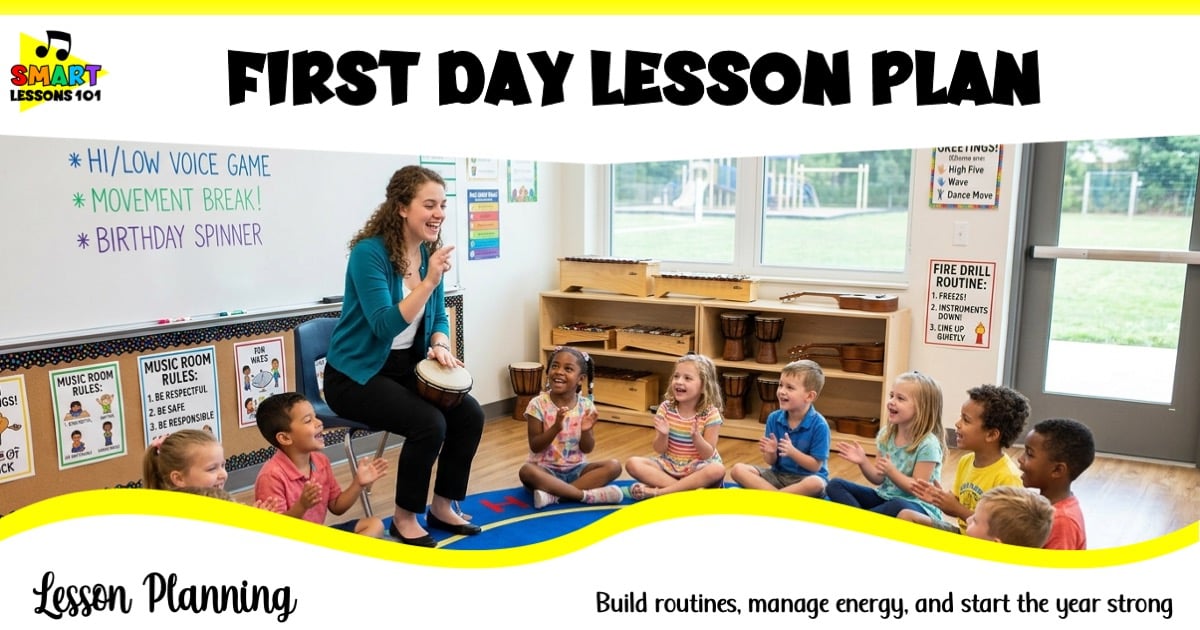
That fresh back-to-school season feeling is officially here! You’ve spent days organizing your room, setting up bulletin boards, and trying to figure out where all those extra rhythm sticks went over the summer. But as Monday morning approaches, one big question remains:
What am I actually going to DO with my students on the first day of music class?
If you're feeling a sudden spike of anxiety, take a deep breath and pause. Every single music teacher—whether in year 1 or year 20—feels that pre-day-one flutter.
Here is the ultimate golden rule to hold onto for Day 1:
Your first lesson is NOT about note reading, music history, or diving straight into your curriculum.
Day 1 is 100% about building relationships, setting clear classroom routines, teaching emergency safety, and making sure every student leaves your room excited to return.
Here is a simple, plug-and-play agenda to make your first day of elementary music completely stress-free!
Lesson Structure
Instead of creating six different lesson plans for six different grade levels, stick to a universal 5-part structure. You can easily scale the energy and complexity up or down based on the grade band!
1. Welcome at the Door
2. Seating & Welcome Chants
3. Attention Grabbers & Safety Routines
4. High-Energy Brain Break
5. Celebration & Exit Routine
Step 1: Welcome at the Door
Your lesson begins before students even walk across the threshold. Setting a warm, inviting tone at the door instantly eases back-to-school jitters and establishes clear boundary expectations.
Instead of having students rush into the room, meet them in the hallway. Display interactive options right by your doorway so students can choose how they say hello before finding their spots.
Teacher Tip:
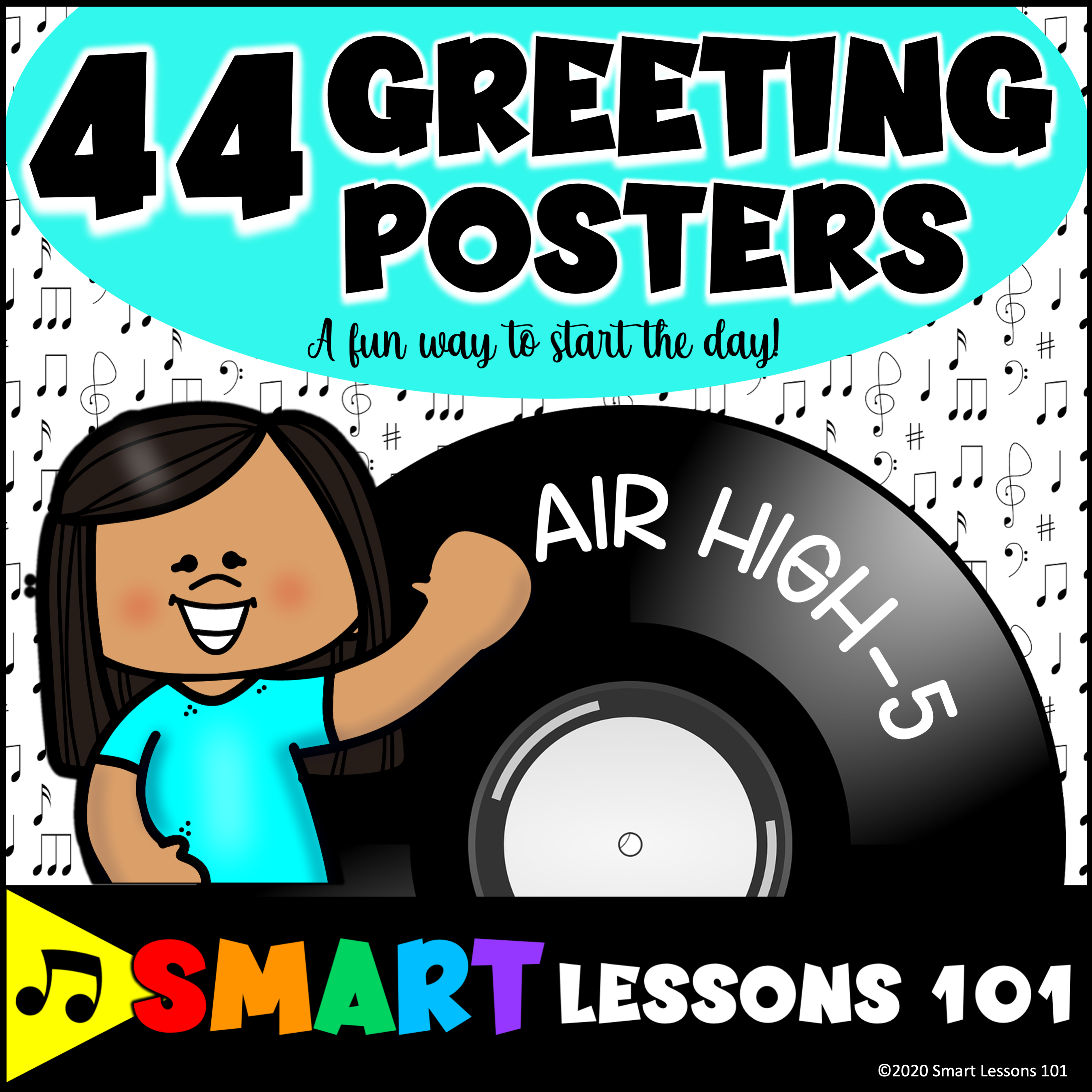
Hang these visual Fun Greeting Posters on your door frame! Students can point to a high-five, a wave, or a quick dance move to greet you on their way in.
2. Seating & Welcome Chants
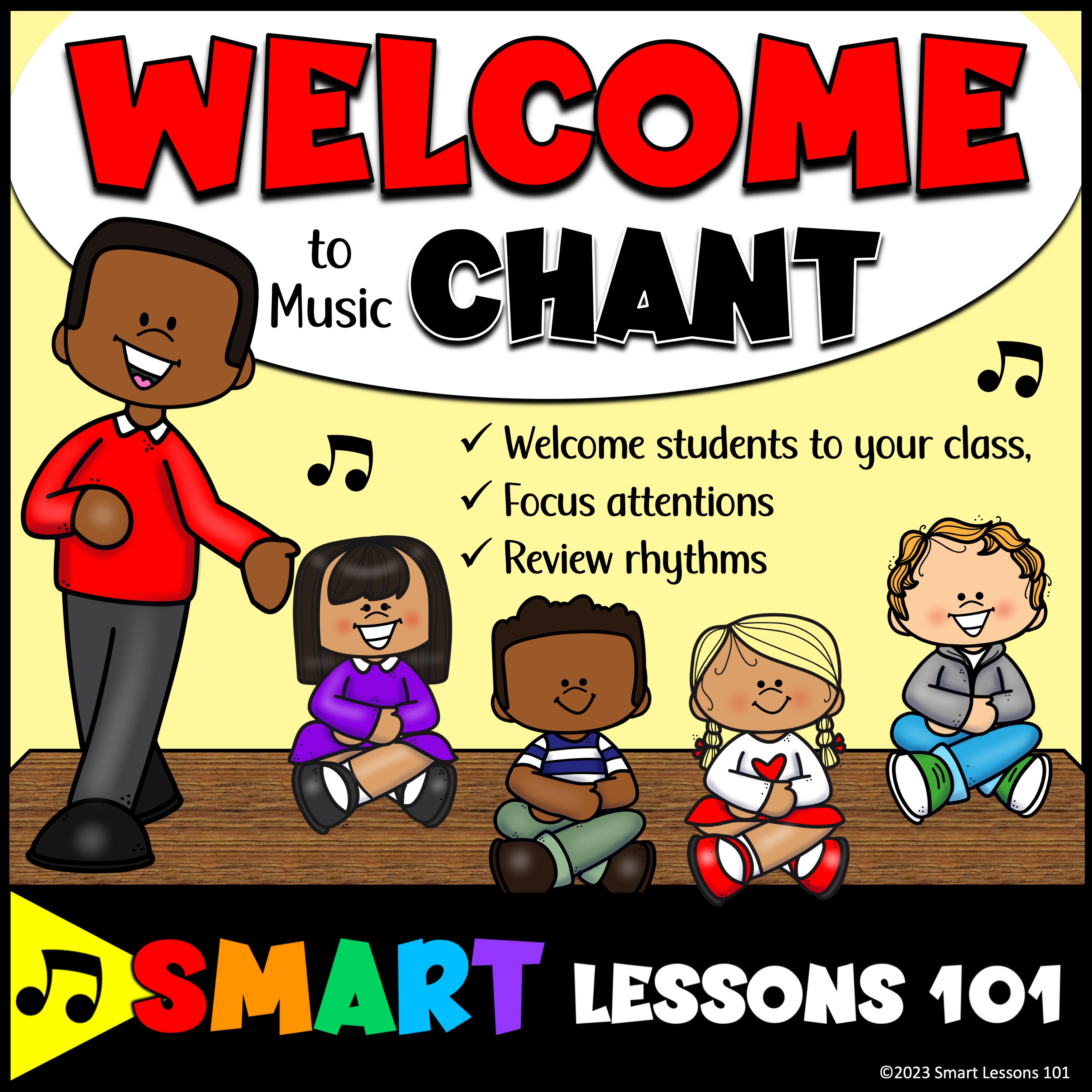
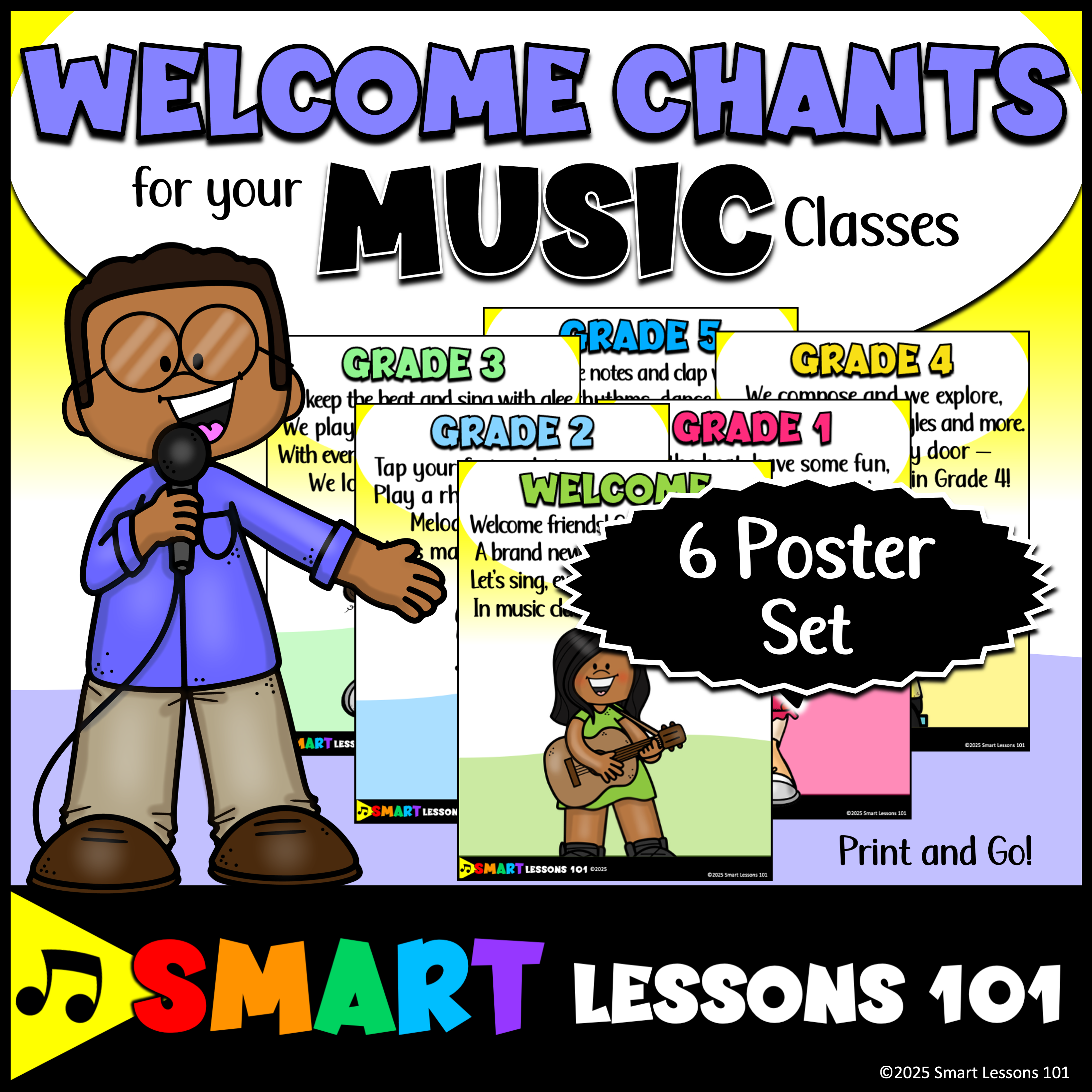
Guide students to their circle or assigned seating spots right away. Rather than starting with a quiet lecture, tap into their natural rhythmic energy with a speak-and-clap chant! Chants get every voice active without requiring singing confidence on day one.
3. Attention Grabbers & Safety Routines
Before diving into active games, establish your primary transition cues. Practice call-and-response patterns so students learn how to turn their eyes and ears to you instantly.
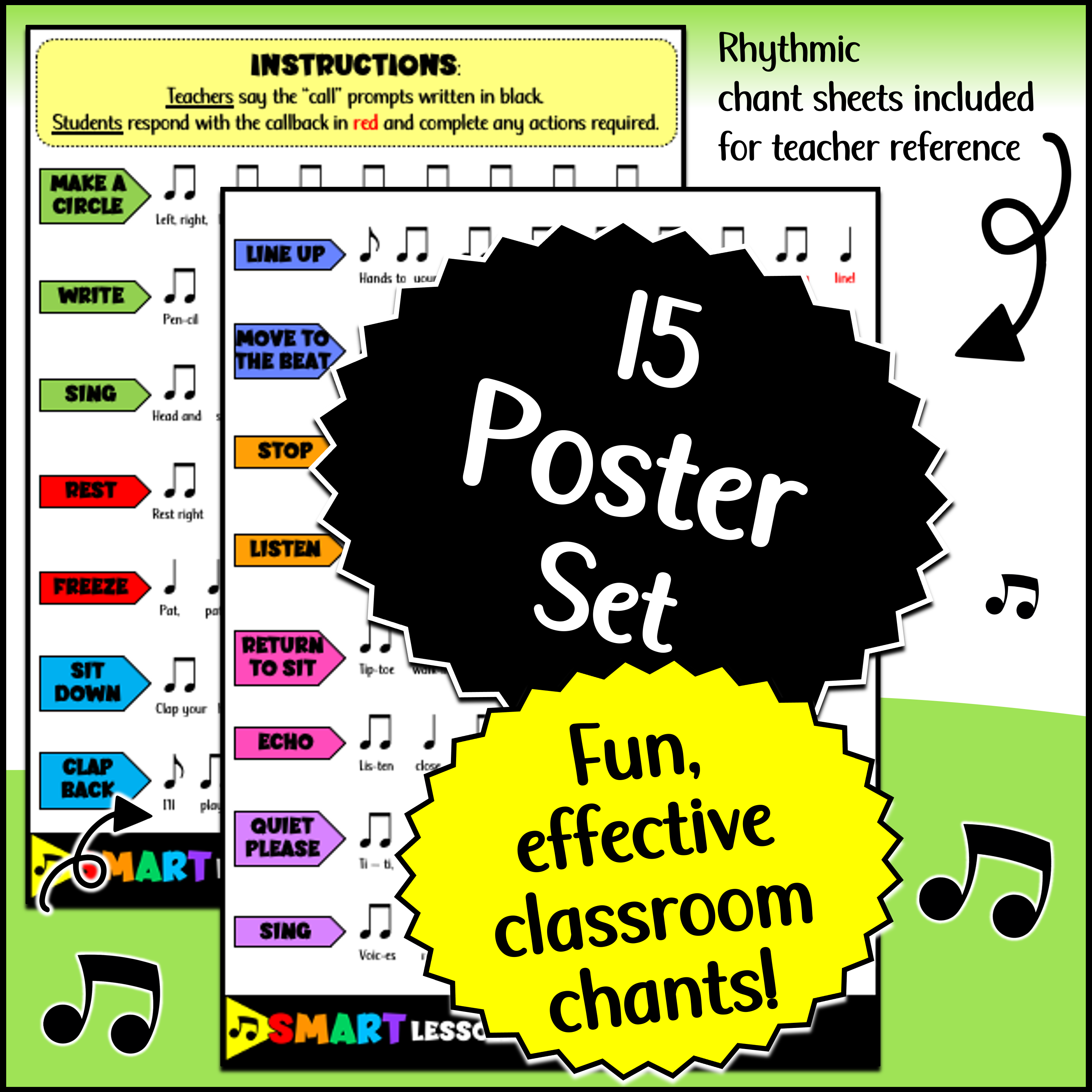
Turning management into a game makes practicing expectations enjoyable rather than punitive. Use interactive cues like Call and Response ATTENTION GRABBERS for the Music Room to keep attention sharp.
Don't Skip the 5-Minute Safety Check!
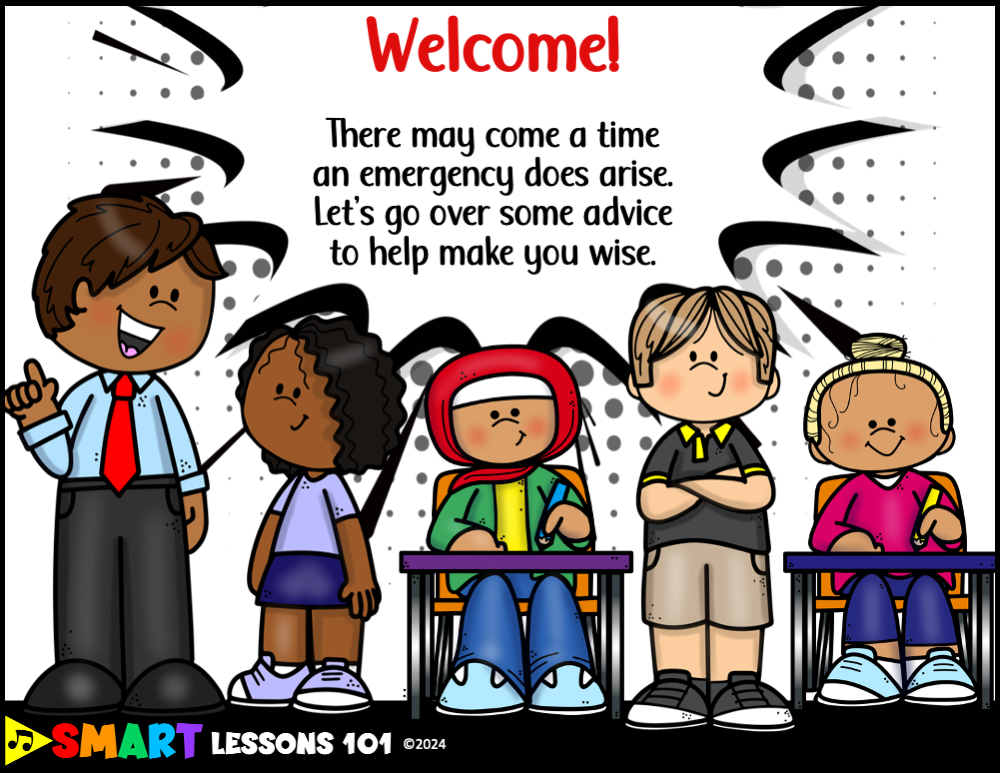
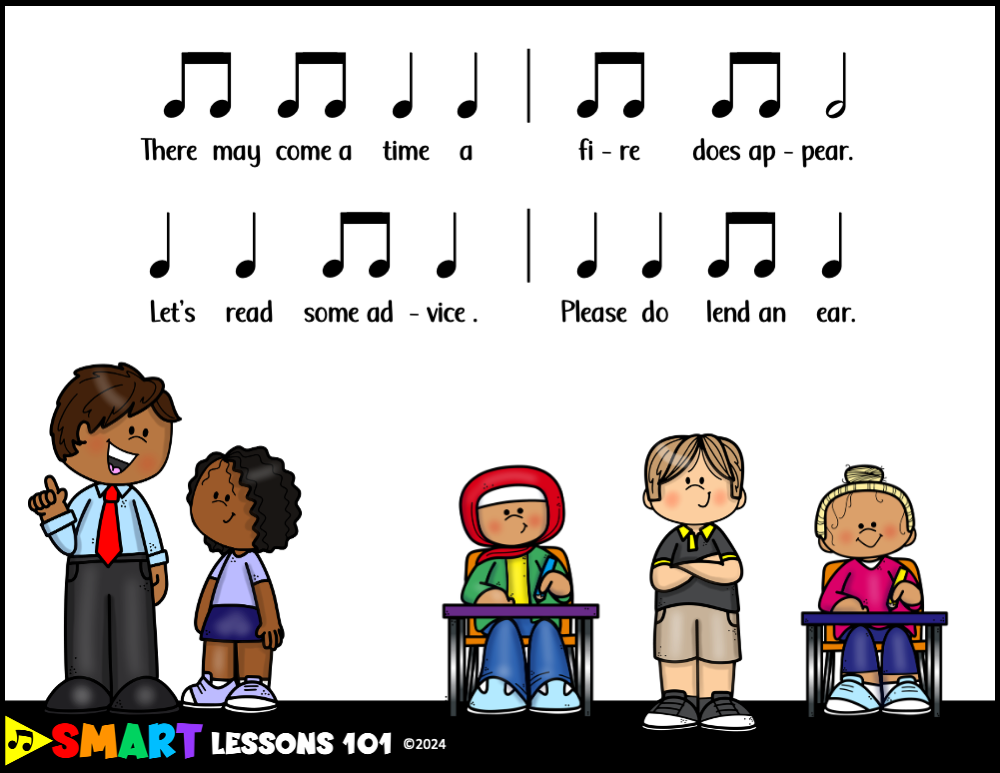
Specialist rooms have unique layouts, heavy gear, and secondary exit routes. Take five minutes on Day 1 to teach your emergency routines:
- Locate the Exit Map:
Point out your primary door map so students know where to walk. - The "Instrument Freeze" Rule:
Explicitly teach students that if a fire alarm or emergency signal sounds, they must immediately freeze, drop/place any instruments gently on the floor, and line up silently.
4. High-Energy Brain Break
Students have been sitting and listening to rules all day long across their homerooms. Giving them a structured movement release in music class makes you an instant favorite!
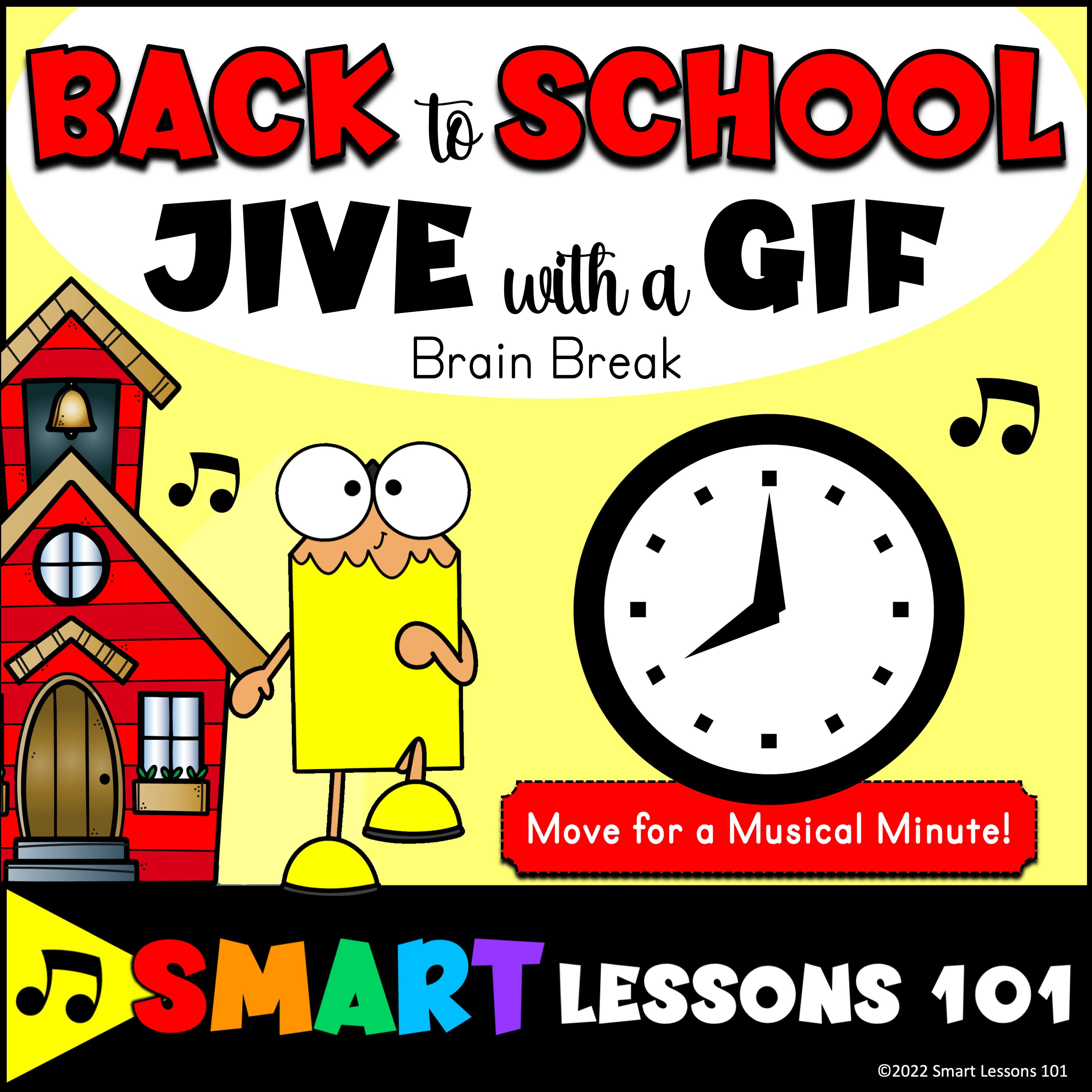
Incorporate visual movement activities like BACK to SCHOOL JIVE With A GIF Brain Breaks. These short, animated activities get students up, moving to the beat, and following kinetic directions safely within their personal space.
5. Birthday Recognition & Exit Routine
Wrap up your active time by celebrating your students! Ask if anyone had a birthday over the summer or has one coming up this week.
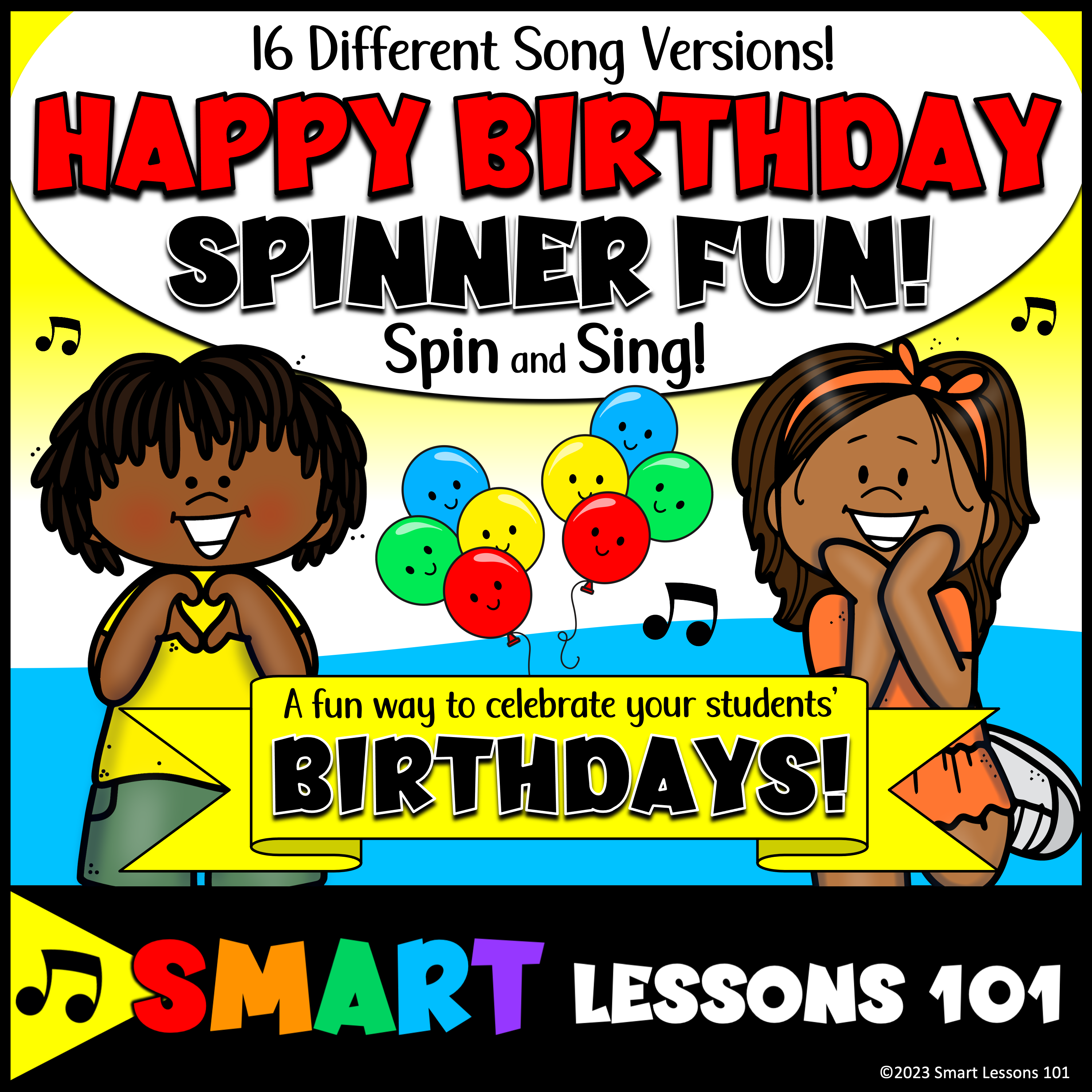
Bring out the Happy Birthday Spinner Music Extravaganza to spin and sing "Happy Birthday" in a fun, wacky way (like jazzy, classical, or western styles). It ends the instructional period on a high note and helps build a sense of community.
Finish by practicing how to line up quietly at the door.
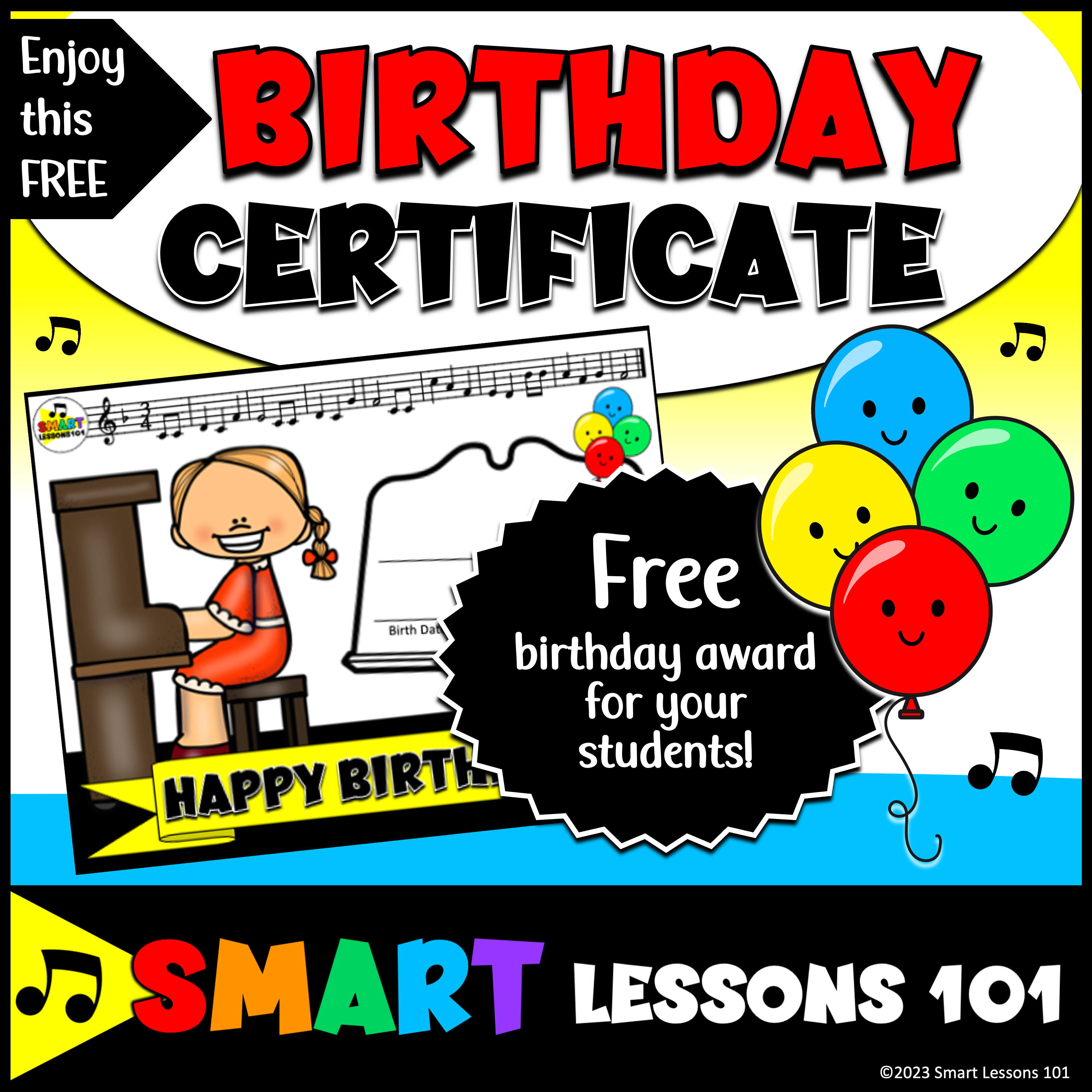
....and don't forget to send them home with their very own birthday certificate from their favorite music teacher!
Grade Level Adaptations
Keep this general guide in mind as you transition between classes throughout your day:
- Primary (K–2):
Keep verbal instructions under 30 seconds. Focus heavily on movement, modeling behaviors, and visual cues. Don't worry about assigned seating charts on Day 1—a simple circle on the rug works best!
- Intermediate (3–5):
Focus on community building, setting clear boundaries around instruments, and engaging rhythm challenges. Give intermediate students opportunities to lead call-and-response patterns or demonstrate movement routines.
Tips for Beginner Music Teachers
If this is your first year in the elementary music classroom, keep these three things in mind:
- Keep Instruments Stowed:
Keep Orff instruments, drums, and ukuleles covered or placed out of reach on Day 1. Focus entirely on establishing rules and personal spatial awareness first. - Post Your Daily Agenda:
Write your 5-step lesson structure on the board. It keeps both you and your students focused during rapid class transitions. - Give Yourself Grace:
If your students stayed safe, learned your primary attention cue, and walked out the door with smiles on their faces, your first day was a resounding victory!
Want More Easy Music Lesson Ideas?
Get music teaching tips, lesson ideas, and free resources delivered to your inbox.
Thank you for subscribing!
Have a great day!