Musical Four Corners: The Low-Prep Back-to-School Icebreaker Your Students Will Love
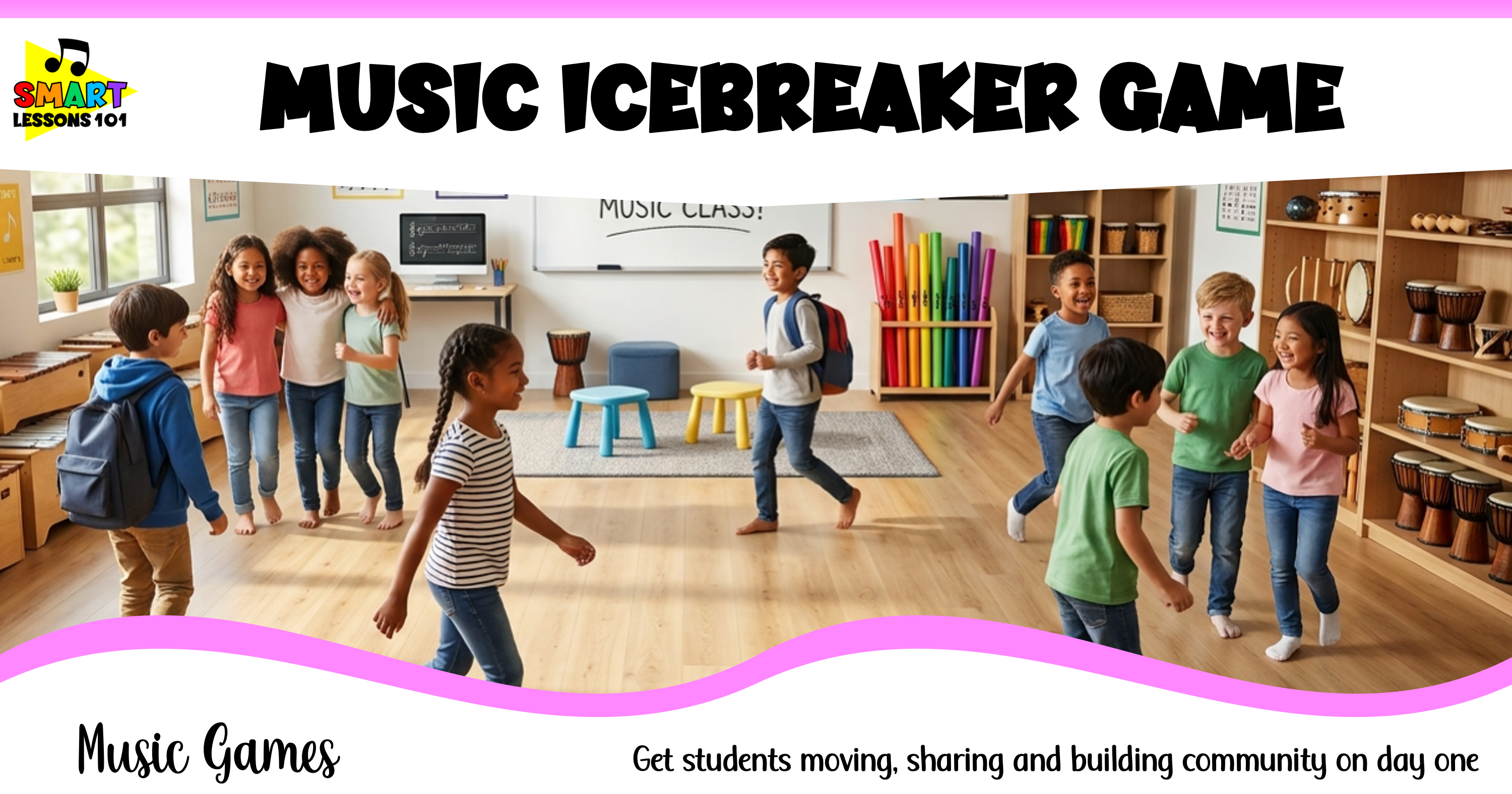
We’ve all been there: the bell rings on the very first day of music class. You’re standing in front of a brand-new group of students who are a mix of nervous energy, summer brain, and quiet hesitation.
While it’s tempting to dive straight into class rules or read through a syllabus, sitting quietly on the rug is usually the last thing young students need after sitting through back-to-school presentations all day.
What if you could break the ice, teach your movement routines, build genuine classroom community, and secretly assess what your students know—all in the first 10 minutes of class?
The Solution? Musical Four Corners
1. Eliminate Back-to-School Jitters (No Public Speaking Required!)
The first week of school can be overwhelming for young musicians. Shy students or pre-readers often dread traditional icebreakers that force them to stand up and introduce themselves to a crowd.
Musical Four Corners removes that pressure completely.
Instead of speaking aloud, students move silently to labeled corners of the room based on their personal preferences and experiences. Whether they’re choosing between singing high/low, playing drums vs. xylophones, or picking their favorite tempo, every student gets to express their identity safely within a group.
2. Informally Gather Data
As music educators, we need to know what our students remember from previous years—and what our new students bring to the table.
Formal pre-tests on day one ruin the fun!
By embedding musical concepts directly into your Four Corners prompts, you get immediate visual feedback on your class dynamic:
- Pitch & Dynamics: Ask students to choose their favorite voice (high squeaky mouse vs. low rumbly bear) or volume (forte vs. piano). Watch how quickly they demonstrate understanding!
- Tempo & Rhythm: Have them move presto or largo to their chosen corner.
- Instrument Knowledge: See which instrument families students recognize and prefer before planning your teaching units.
You get a clear picture of your students' background knowledge without handing out a single pencil or worksheet.
3. Establish Community, Expectations & Routines Early
Beyond gathering data, Four Corners sets the tone for classroom management from minute one.
Four Corners sets the tone for classroom management.
When you frame the game with clear parameters—like using "tip-toe cat feet" while the travel audio plays and freezing instantly when the music stops—you are practicing essential spatial awareness and active listening skills in a play-based format.
Plus, once students land in their chosen corner, giving them a quick 5-second mini-chat prompt ("High-five someone in your corner and tell them your favorite instrument!") creates instant peer connections over shared interests.
Ready to Play?
Want to save prep time and hit the ground running this week? Check out this ready-to-project Music Icebreaker Four Corners Game!
It includes:
- complete instructions
- interactive presentation slides
- embedded audio movement cues
- visual discussion timers
- questions designed specifically for K–6 general music and beginner band classes
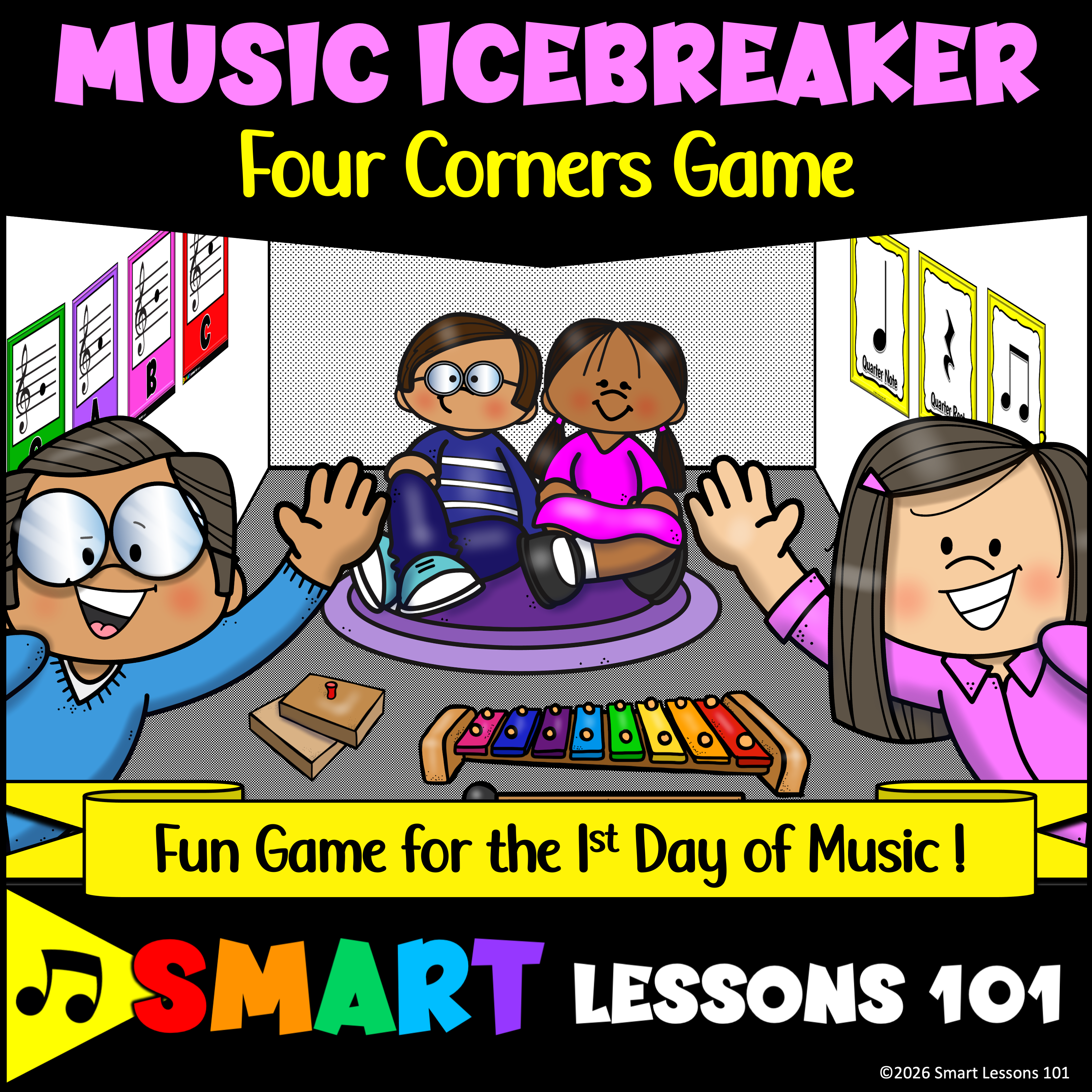
Click here to get the Music Icebreaker Four Corners Game on TpT and make your first day effortless!
Want More Easy Music Lesson Ideas?
Get music teaching tips, lesson ideas, and free resources delivered to your inbox.
Thank you for subscribing!
Have a great day!